THE WINNER
Oat biscuits last longest
After a two-second dunk, the oat biscuit held together for 29 seconds on average, against 17.5 for the shortie and 8.5 for the digestive.
Compare the biscuits doodledunking
Start
THE SCIENCE OF THE SOGGY BISCUIT
Every biscuit has a break point.
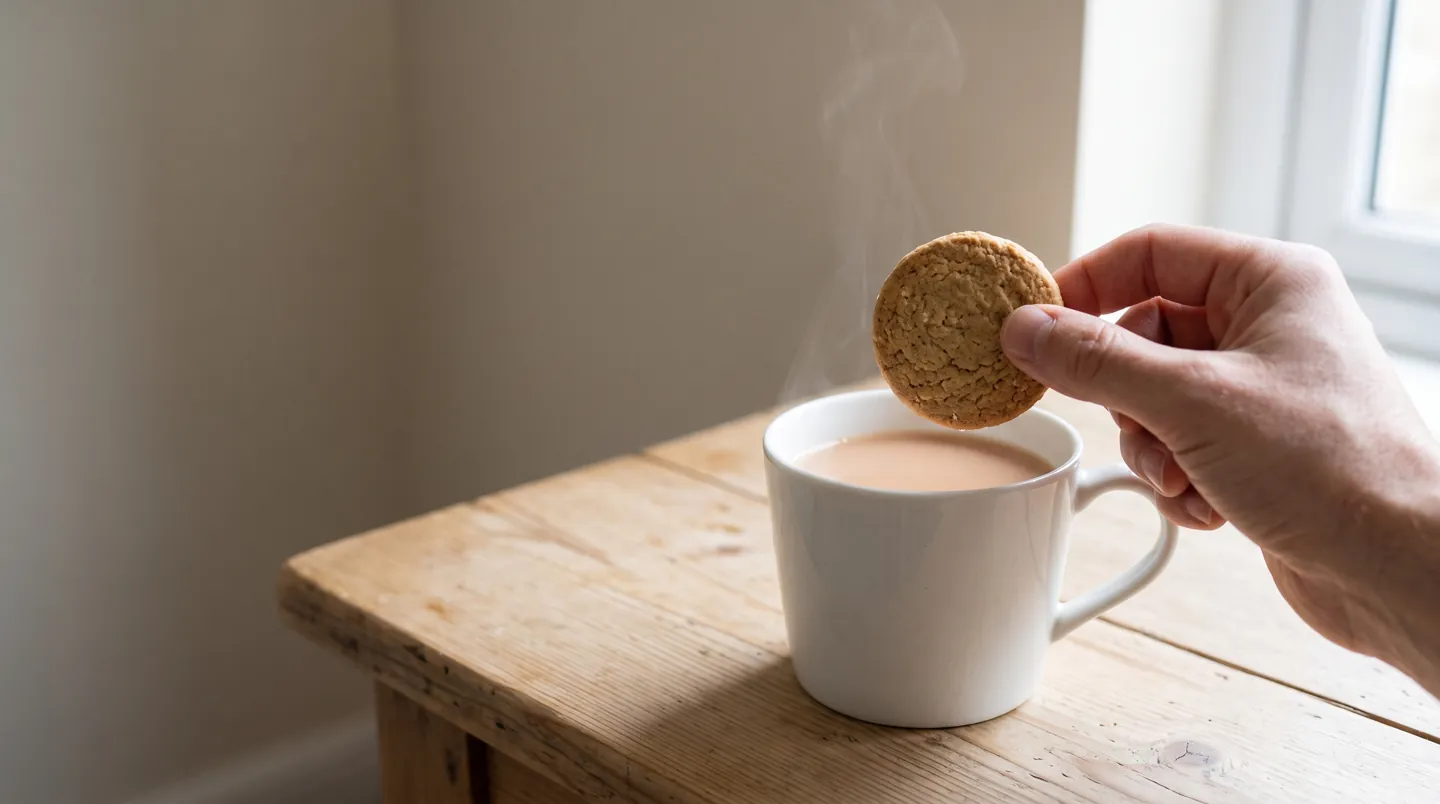
Tea creeps into the tiny gaps between crumbs, softens what holds them together, and the dunked end gives way. Two researchers in a Cardiff hospital staff room timed exactly when, for four everyday biscuits.
2 SECONDSthe test dunk
Pick a biscuitKeep in mind
THE SHORT ANSWER
A 2022 BMJ Christmas study tested oat, digestive,
rich tea and shortie biscuits in six ways.
THE WINNER
After a two-second dunk, the oat biscuit held together for 29 seconds on average, against 17.5 for the shortie and 8.5 for the digestive.
Compare the biscuitsTHE LINE-UP
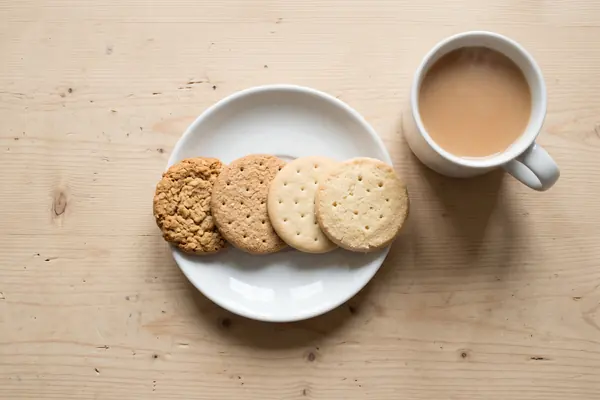
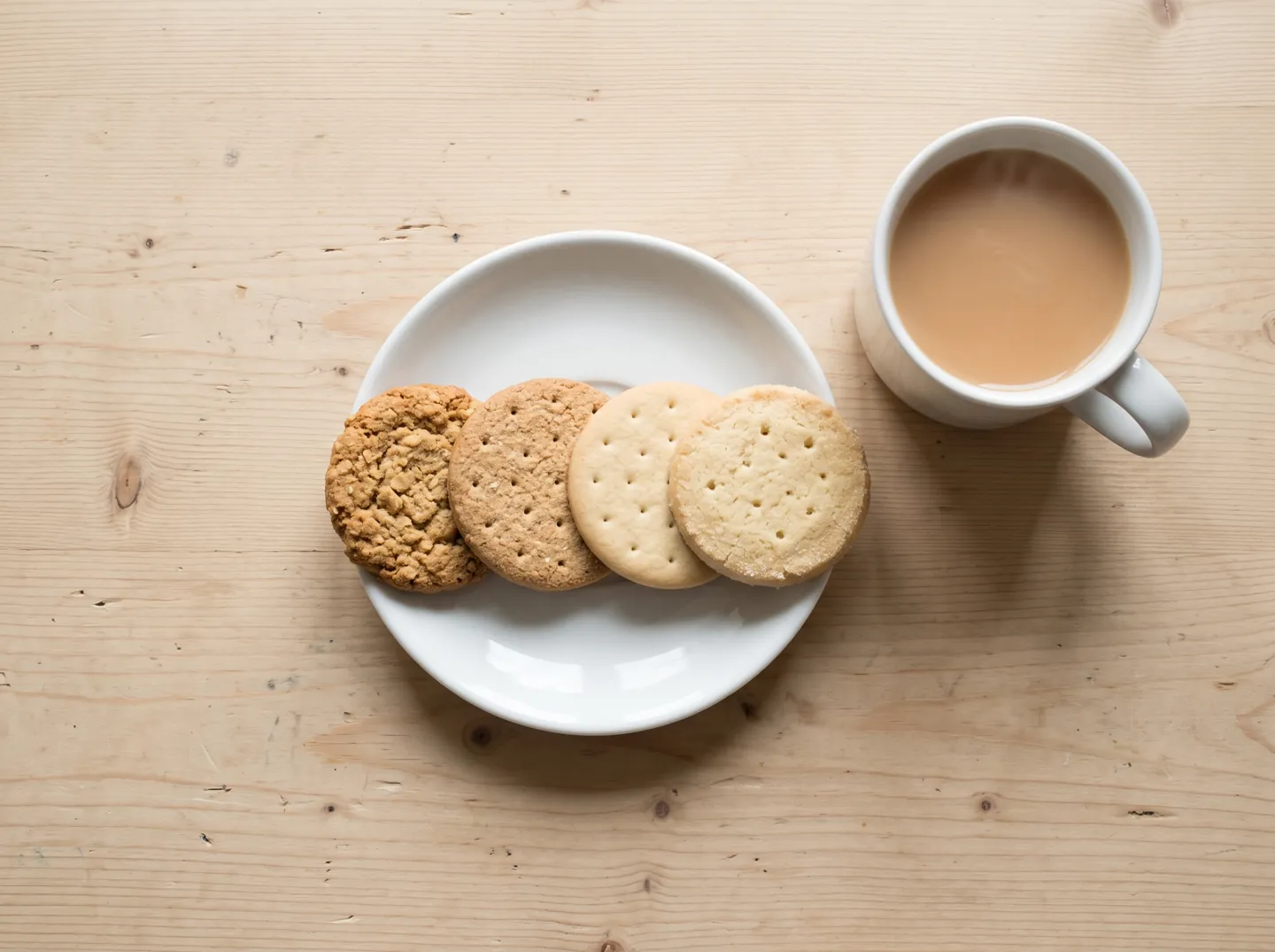
The researchers kept to round, single-layer biscuits with no chocolate, coating or filling, so the biscuits themselves were the only difference.
See the numbersTHE PHYSICS
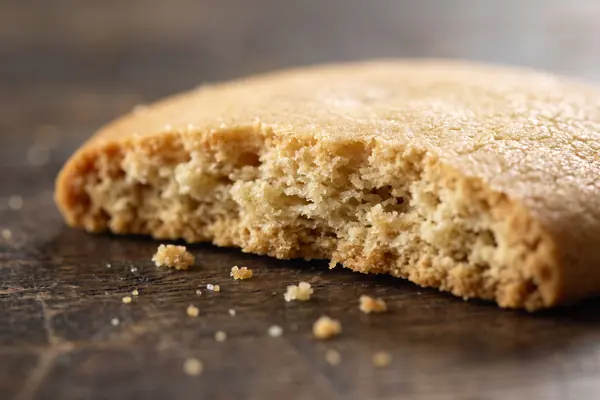
A biscuit is porous. Capillary action pulls liquid into the spaces between crumbs, the same effect that lets a paper towel soak up a spill.
Why it happensA QUICK BISCUIT CHECK
Pick a biscuit to see how long it held together after a two-second dunk in a fresh mug of tea, before it fell apart. The bar shows how well it coped.
Based on the pragmatic dunk break point test in Jones and Francis, BMJ 2022. One small study, done for fun at Christmas.
TWO NUMBERS WORTH KNOWING
One figure on how long a dunked biscuit lasts,
one on how long a fresh mug takes to cool.
29 s
Oat biscuit after a 2-second dunk
The oat biscuit held together for 29 seconds on average after a two-second dunk, the longest of the four biscuits tested.
BEST DUNKER · BMJ 2022
370 s
Fresh mug to drinking temperature
With 40 mL of milk, the study's mug of tea took a median 370 seconds to reach the 61ºC the researchers agreed was a comfortable drinking temperature.
COOLING TIME · BMJ 2022
The study found that dunking biscuits at 30 and 60 seconds cooled the tea faster: with a digestive, the median time to drinkable tea fell to 240 seconds.
FOUR WAYS TO DUNK BETTER
None of these needs special kit. They come from how the study tested its biscuits and from the simple physics of tea soaking into crumbs.
Step 1
In the study, the oat biscuit outlasted the shortie, digestive and rich tea after the same short dunk.
Step 2
The test dunk was two seconds. The longer a biscuit sits in the tea, the more liquid soaks into its gaps.
Step 3
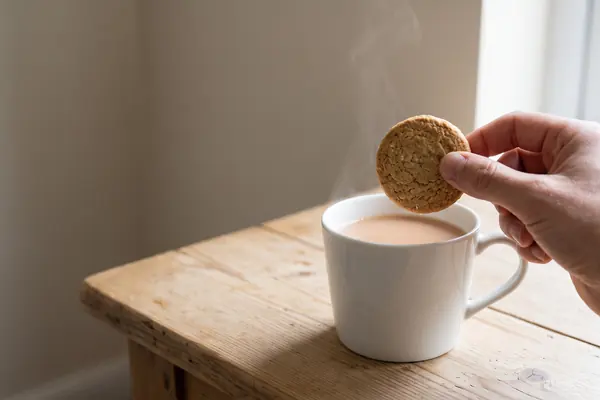
The researchers used the 'universal dunking grip' between thumb and finger, dunking only as far as the fingertips.
Step 4
The study counted how long each biscuit held once lifted out. Even the best one gave way within half a minute.
WHY BISCUITS FALL APART
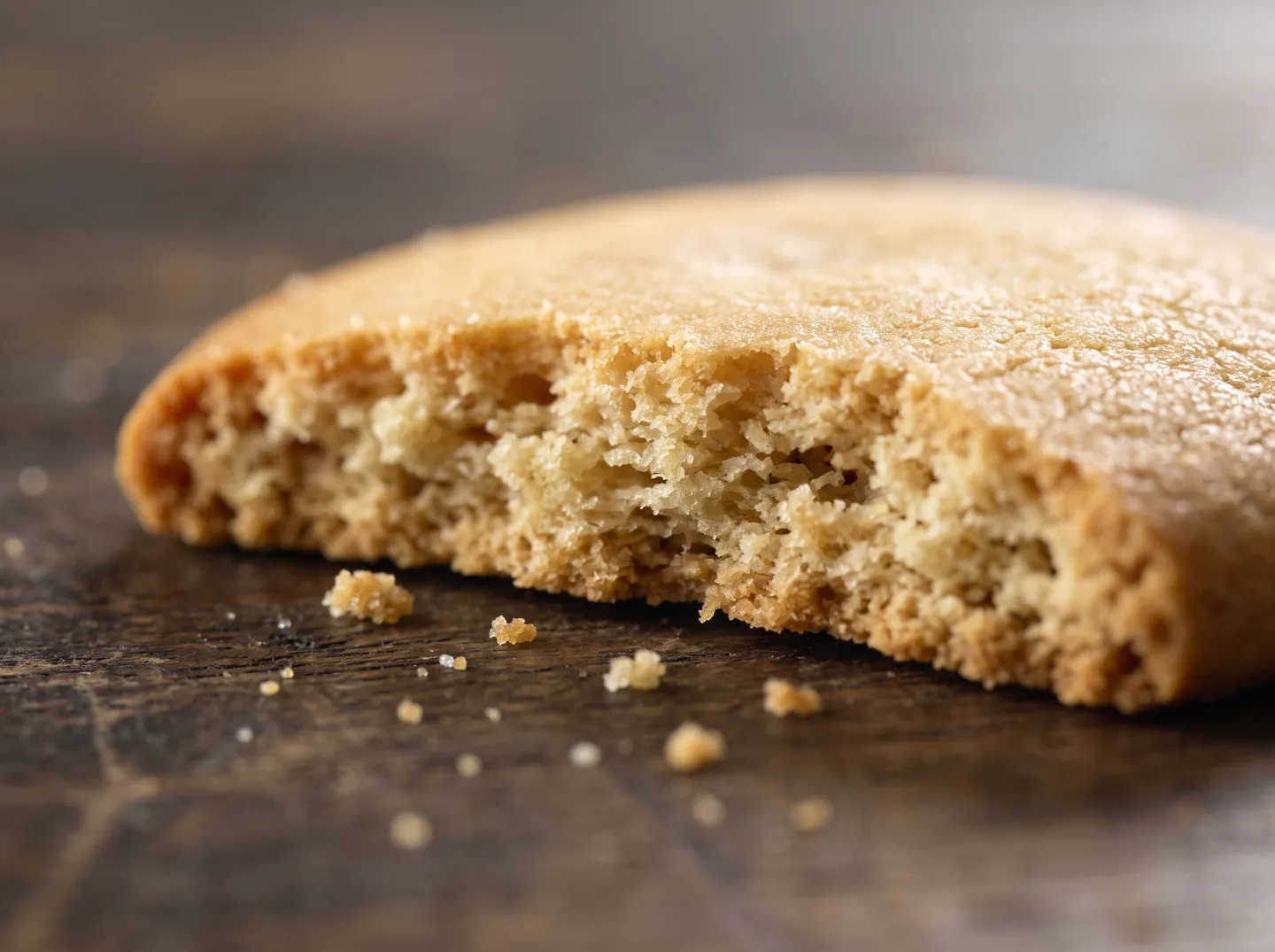
A biscuit is full of tiny spaces between its crumbs. Capillary action draws liquid into narrow gaps like these, which is also how a paper towel or a sponge soaks up water. As tea moves in, the biscuit softens and weakens.
Physicist Len Fisher of the University of Bristol used the Washburn equation, first derived in 1921 to describe capillary flow in porous materials, to explain dunking. His work, published in Nature in 1999, won that year's Ig Nobel Prize for Physics.
Questions
In a 2022 BMJ study of four plain biscuits, the oat biscuit lasted longest after a two-second dunk (29 seconds on average) and ranked first overall across six tests.
Biscuits are porous. Capillary action draws the tea into the gaps between the crumbs, which softens the biscuit until the wet end can no longer hold its own weight.
The digestive. When the researchers dripped 2 mL of tea onto each biscuit, the sound of it snapping dropped by 15%, the smallest fall of the four.
In the study it did. Dunking a biscuit at 30 and 60 seconds shortened the time for the tea to reach drinking temperature for all four biscuits tested.
Len Fisher used the Washburn equation, which describes capillary flow in porous materials, to explain dunking. It earned him the 1999 Ig Nobel Prize for Physics.
Destination
Updated
ABOUT THIS NAME
doodledunking.com is part of the DoodleSale portfolio. It isn't in an auction right now, but you can ask about leasing it.